
July 19–24, 2025 | Bali, Indonesia
The International Health Economics Association (IHEA) is a long-established international non-profit academic organization that brings together health economics scholars from universities, research institutes, international organizations, and policy sectors worldwide. Founded in 1994 by Tom Getzen, IHEA has been committed to advancing research and exchange in the field of health economics. Its mission is to foster an inclusive global community of health economists, strengthen research and teaching in the discipline, promote the sharing of ideas and resources, develop economic theories and methodologies, and generate empirical evidence to support equity in health and healthcare.

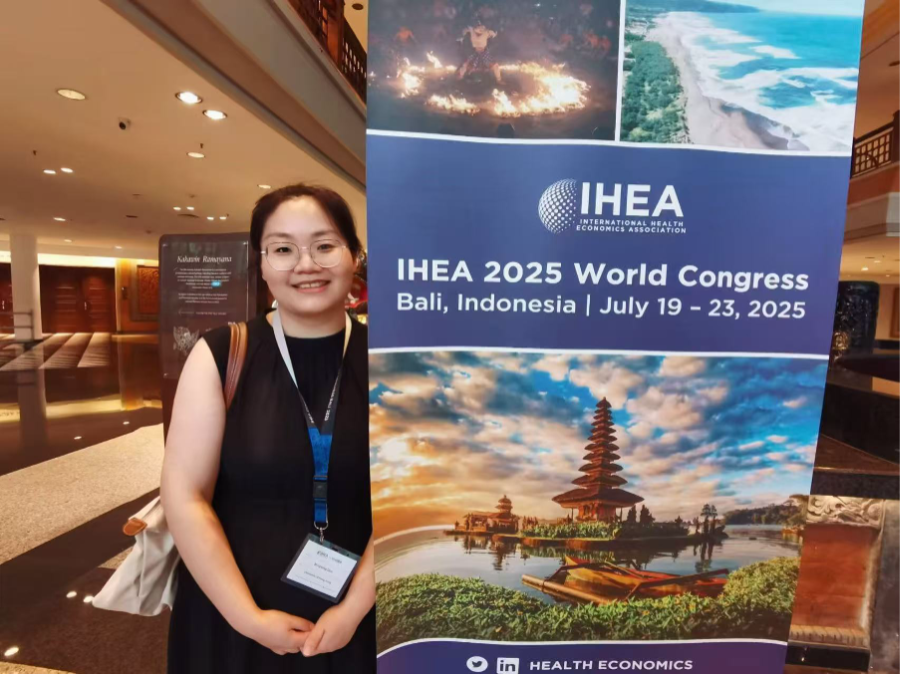
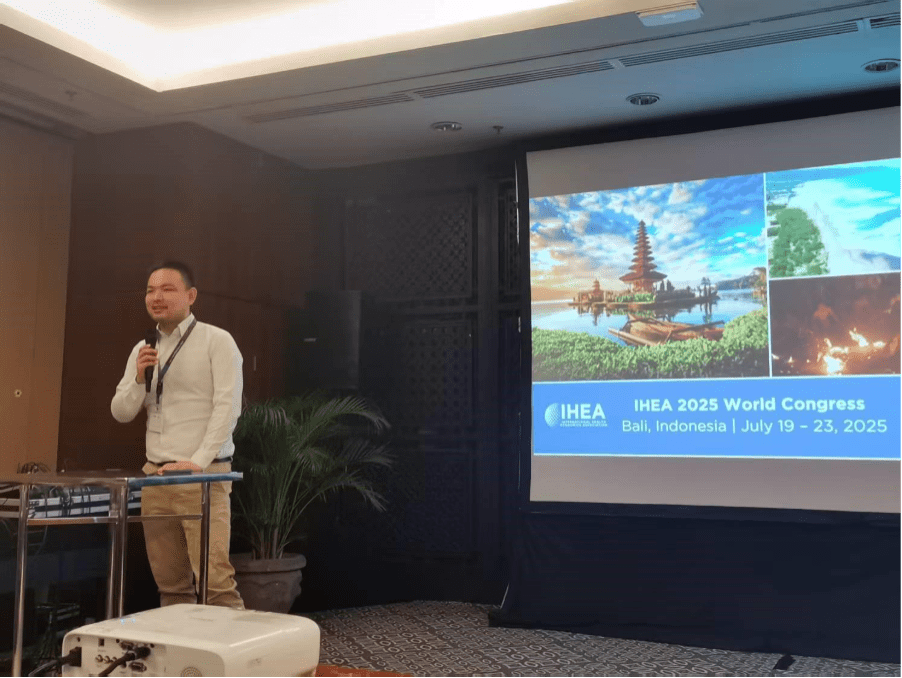
The 16th IHEA World Congress was held from July 19 to 23, 2025, in Bali, Indonesia. As one of the most influential academic organizations in the field, IHEA attracted scholars from diverse universities, research institutions, and policy bodies, who engaged in high-level exchanges and discussions on frontier topics such as health system efficiency, health technology assessment, behavioral economics, and global health policy. Presentation by Presentation byPresentation by , presenting research findings and practice-based explorations that highlighted the contributions of early-career and mid-career scholars in health economics.
Networking and Community Building
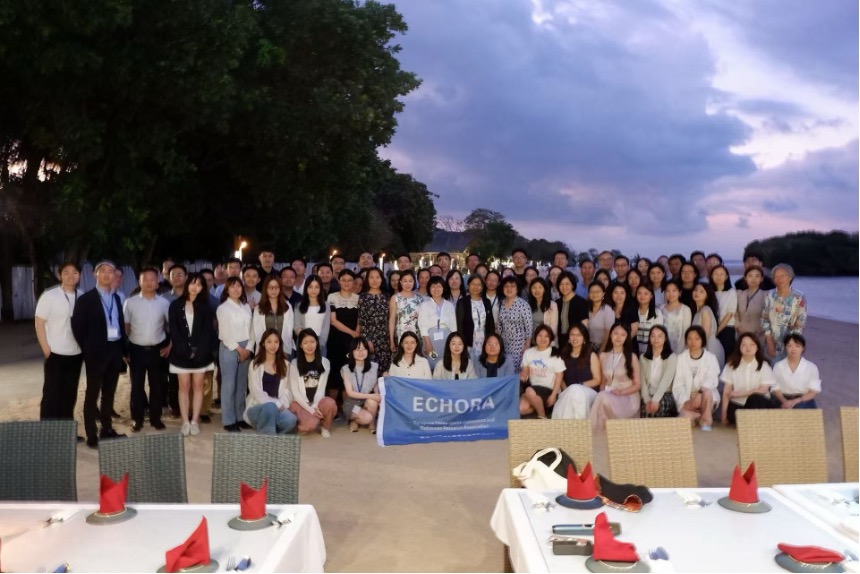
During the congress, ECHORA Vice President Dr. Shanquan Chen, together with scholars Peizhe Yan, Sixian Du, Jiawei Zhang, and Haijun Zhang, organized a large-scale dinner gathering of over 100 Chinese health economists. The dinner took place at a scenic beachfront restaurant, where the sea breeze and ocean views created a relaxed and cheerful atmosphere for exchange. The event drew Chinese scholars from around the world, who engaged in lively conversations on research, teaching, and career development, strengthening ties and fostering new opportunities for collaboration amid delicious food and shared laughter.
In addition to networking events, many ECHORA members also delivered outstanding research presentations across different parallel sessions, covering a wide range of cutting-edge topics such as health technology assessment, health behavior, and healthcare payment systems. Their contributions fully demonstrated the professional perspectives and research depth of Chinese scholars on the international academic stage.
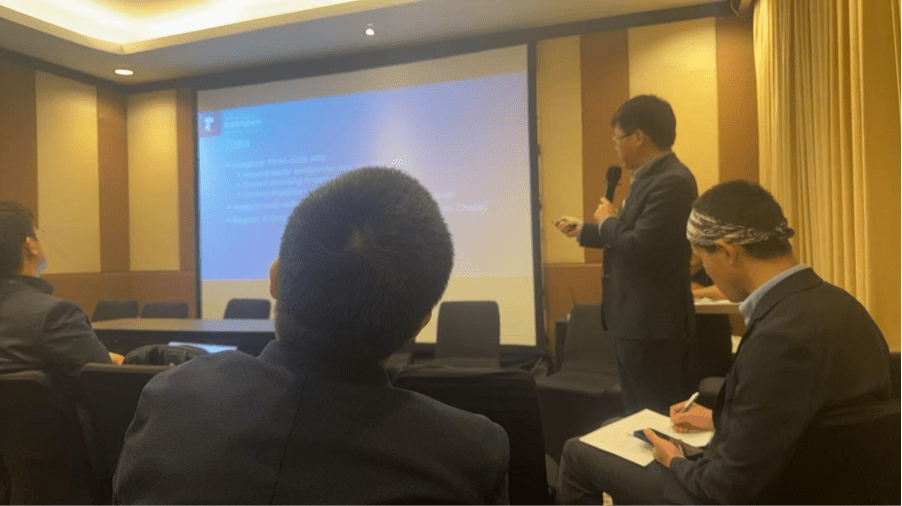
Assistant Professor Shanquan Chen from the London School of Hygiene & Tropical Medicine and Professor Zhuo Chen from the University of Georgia co-chaired a special session on telemedicine and internet healthcare. In recent years, as internet penetration has expanded and smartphones have become widespread, telemedicine has rapidly developed worldwide. However, its adoption still faces diverse drivers and barriers.
This session focused on practices in China and the United States, addressing both supply and demand sides.
- The first paper, using data from an online medical platform in China, evaluated the effect of platform endorsement on the volume, quality, and charitable provision of online medical services by physicians.
- The second paper examined the substitution relationship between online consultations and offline visits during the COVID-19 pandemic.
- The third paper, based on 2018–2019 claims data for fee-for-service Medicare beneficiaries in Georgia, USA, explored the social determinants of telemedicine use.
- The fourth study combined data on hospital leaders’ education and career backgrounds with consultation platform data to assess how leadership characteristics influenced physicians’ adoption of online medicine within hospitals.
The discussion revolved around the drivers of telemedicine development, potential substitution effects, issues of social equity, and hospital management factors. It highlighted the policy implications of these studies, particularly for low- and middle-income countries.
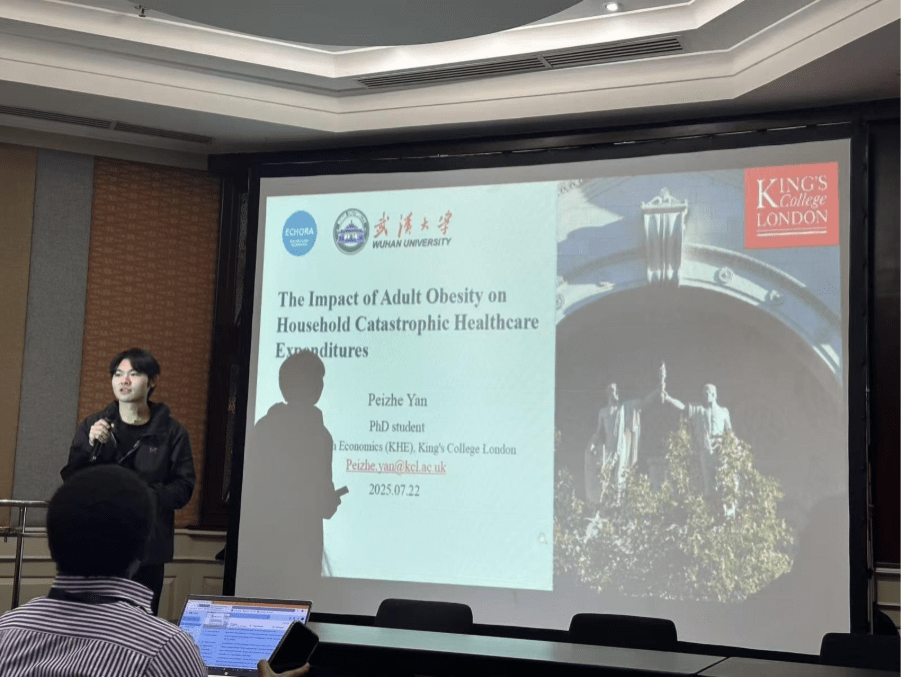
Peizhe Yan, a PhD student at King’s College London, presented a paper titled The Impact of Adult Obesity on Household Catastrophic Healthcare Expenditures.
Using a Probit instrumental variable model and pooled cross-sectional data from the CFPS (2010–2020), the study examined how individual obesity affects the risk of catastrophic healthcare expenditures at the household level. Results showed that households with obese members were significantly more likely to experience catastrophic healthcare expenditures, even though obese individuals did not differ significantly from others in terms of healthcare utilization and expenditure. The primary driver of this heightened risk was the substantial reduction in income among obese individuals, particularly in low-income households.
The study suggests addressing chronic disease-related discrimination in the labor market, reducing income inequality, and strengthening multi-level protection systems to reduce financial vulnerability.
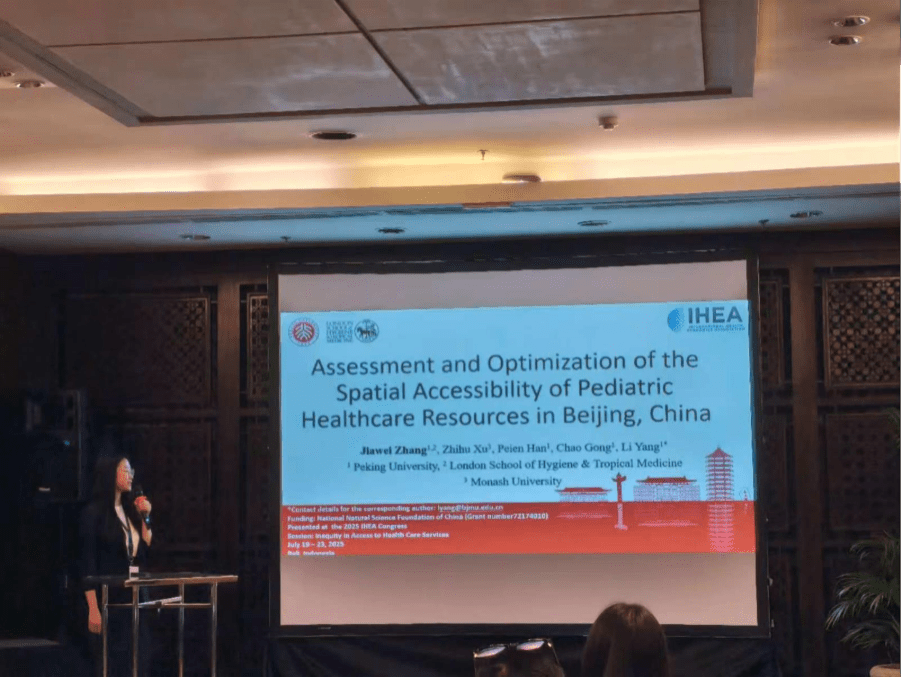
Jiawei Zhang, a joint PhD student at Peking University and the London School of Hygiene & Tropical Medicine, presented research in a session on inequity in healthcare access. Her paper, Assessment and Optimization of the Spatial Accessibility of Pediatric Healthcare Resources in Beijing, China, analyzed the current distribution of pediatric medical resources in Beijing. The study examined the accessibility of pediatric doctors and hospital beds, and proposed resource optimization strategies to support equitable access to pediatric healthcare.
Dr. Chengxu Long from King’s College London delivered two long oral presentations at the congress:
- Social support, cognition, and mental health among older people in China: A longitudinal life course study(published in Social Science & Medicine). This research treated social support as a key dimension of social capital, applying the Cumulative (Dis)Advantage Theory to explore how social support at different life stages influences cognitive function and depression in older adults.
- Can long-term care insurance reduce catastrophic health and long-term care expenditures among older adults? A quasi-experimental study in China (published in European Journal of Ageing).
Dr. Chengxu Long completed his PhD in Health and Ageing Research at King’s College London under the supervision of Professor Wei Yang (Director of the Institute of Gerontology) and a Fellow of the British Academy of Social Sciences. Previously, he earned his bachelor’s and master’s degrees in management at Huazhong University of Science and Technology under Professor Zhanchun Feng. He will soon return to China to continue research and teaching in ageing and global health.
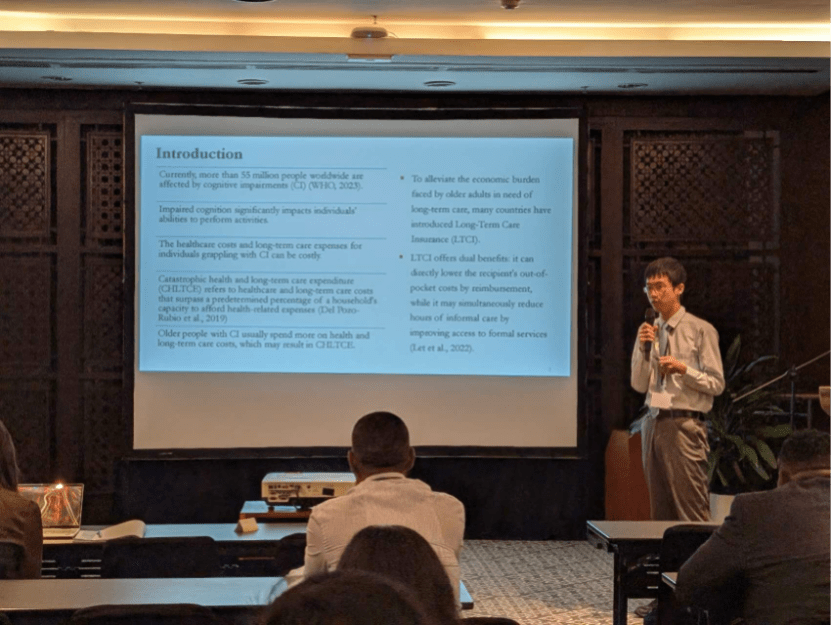
Bingqing Guo, a PhD student at the School of Public Health, The University of Hong Kong and an ECHORA member, presented two studies conducted with her supervisor on health financing and financial protection:
- The first study systematically assessed the performance of SDG indicator 3.8.2, comparing the old and new versions in monitoring financial hardship due to out-of-pocket (OOP) healthcare payments.
- The second study examined changes in financial protection in China’s health financing system from 2011 to 2021, focusing particularly on trends in OOP payments and using decomposition analysis to reveal underlying drivers.
Yeqing Zhang, a PhD student at University College London, presented on Chinese Women’s Preferences for Fertility Support Policies: Evidence from a Discrete Choice Experiment.
The study conducted a discrete choice experiment (DCE) among married women aged 21–49 with one child, randomly sampled across 31 provinces in China. It assessed the impact of five types of policies—maternity leave, paternity leave, childcare support, financial subsidies, and career promotion—on second-child fertility intentions.
Findings showed that all five policies were significantly associated with higher intentions to have a second child (p<0.001), with career promotion being the most influential factor. Compared to a two-year career promotion delay, no delay increased women’s willingness to have a second child by 5.0 percentage points. Extending paternity leave from 0 to 20 days (2.6 pp, 95% CI 2.3–3.0) had a larger effect than extending maternity leave from 98 to 158 days (1.8 pp, 95% CI 1.5–2.1).
The estimated implicit willingness-to-pay for avoiding career promotion penalties was about 26,763 RMB. The results highlight the crucial role of career advancement in fertility decisions, suggesting that gender-equal policies may be more effective than direct financial subsidies in encouraging childbirth.
Di Yang, a research fellow at the London School of Economics and Political Science, presented a study applying machine learning methods to analyze the relationship between socioeconomic, healthcare, and behavioral health determinants and premature mortality across U.S. counties.
Using U.S. County Health Data, the team constructed a population health production function with the XGBoost algorithm, which accommodates flexible functional forms (interactions, nonlinearities, polynomial orders). The independent variables included changes (2010–2014) and baseline levels of health determinants, predicting the trend of years of potential life lost (YPLL) at the county level for 2015–2019.
Findings identified baseline obesity, physical inactivity, and unemployment rates during 2010–2014 as the three strongest predictors of subsequent YPLL trends. Elasticity estimates indicated that a 1% reduction in baseline obesity, inactivity, and unemployment rates was associated with average county-level declines in YPLL trends of 0.72%, 0.37%, and 0.28%, respectively.
The results suggest that policymakers aiming to maximize health investment returns in reducing premature mortality should prioritize determinants such as obesity, inactivity, and unemployment, while tailoring strategies to local baseline conditions.
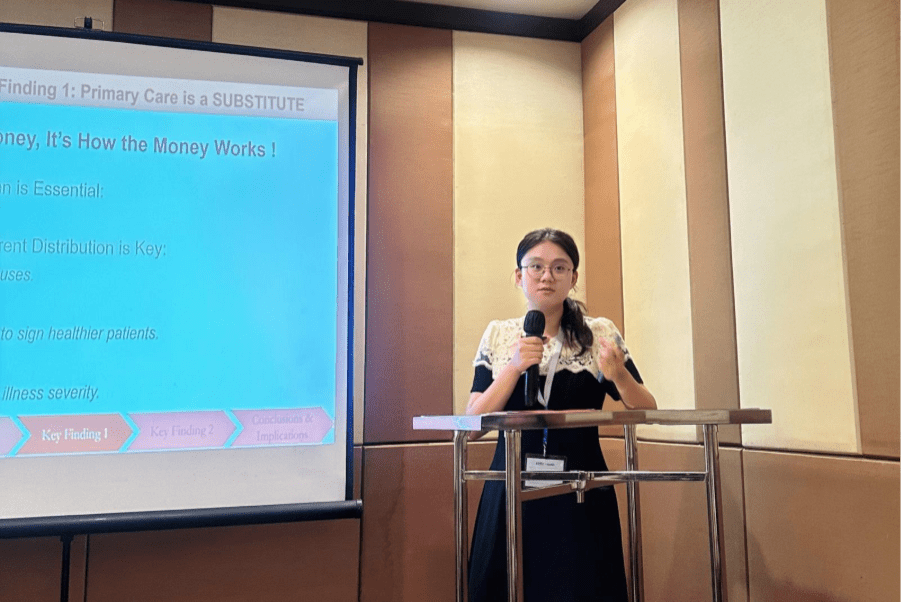
Jia Tang, a PhD student at Renmin University of China, presented How Do the Incentives for Family Physicians Affect the Implementation of Family Physician Contract Service Policy in China? A Qualitative Study.
Drawing on in-depth interviews conducted in four Chinese cities, the study found that small capitation payments alone were insufficient to motivate family physicians, often leading to “sign without service.” Only by adjusting payment according to disease severity, ensuring independent and transparent disbursement, and granting teams more autonomy could perverse incentives such as patient selection be avoided. Establishing smooth referral pathways, trust-based doctor-patient relationships, and stronger professional identity were identified as key to creating a sustainable incentive system.
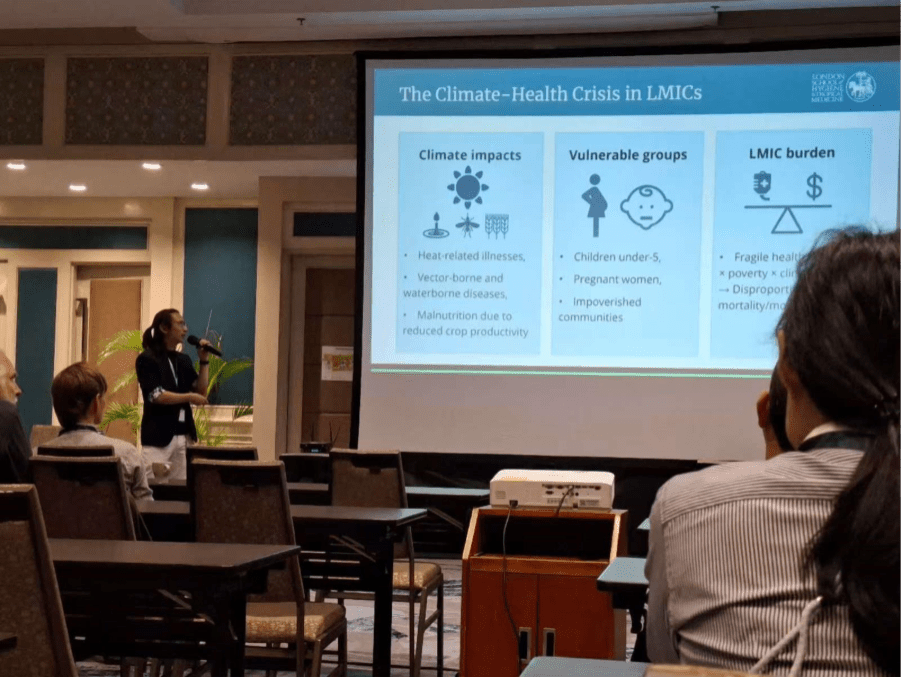
Ziyi Lin, a research fellow at the London School of Hygiene & Tropical Medicine, presented research on climate change and child health at IHEA 2025 in Bali.
The study projected that under a high-emissions scenario (SSP585), compared to a low-emissions scenario (SSP119), the burden of diarrhea, preterm birth, and mortality among children under five in Kenya and South Africa would increase by 40–120% between 2040 and 2059. This equates to an additional loss of around 70 disability-adjusted life years (DALYs) per 100,000 children.
Children are only one vulnerable group; pregnant women, the elderly, and low-income communities are also at grave risk. The results underscore that reducing greenhouse gas emissions is not only an environmental issue but also a vital public health action to save lives. Tackling the climate crisis is urgent—the time for action is now!
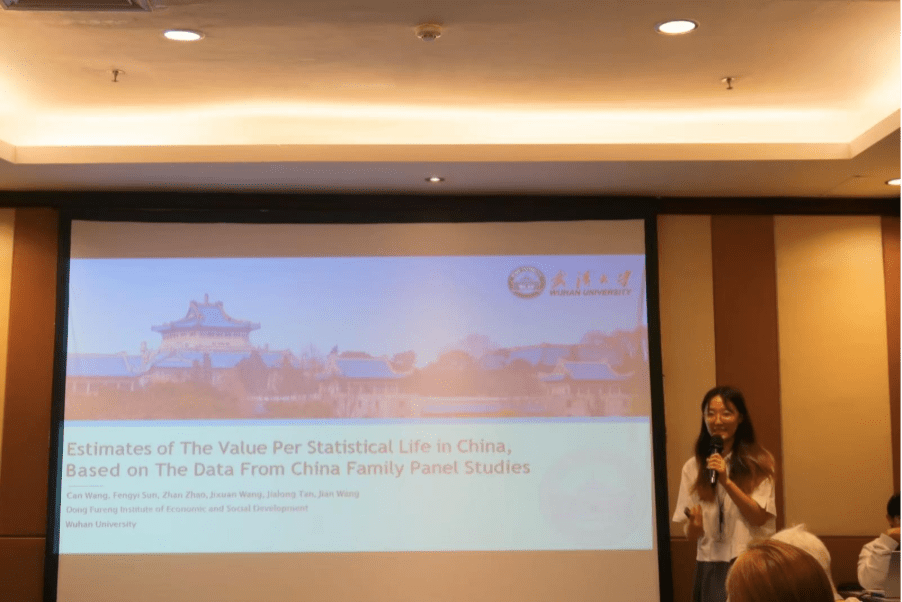
Can Wang, a master’s student at the Institute for Economic and Social Development, Wuhan University, reported on Estimates of the Value Per Statistical Life in China, Based on Data from the China Family Panel Studies.
Using the hedonic wage model and CFPS data from 2010 and 2020, the study estimated China’s value of a statistical life (VSL). Results showed that, after adjusting for inflation, VSL increased 4.3-fold over the decade, reflecting rising recognition of life’s value alongside economic growth. However, risk compensation remained inadequate for low-income groups, and significant regional disparities in VSL persisted.
The findings provide important references for policymaking and resource allocation, while deepening understanding of risk compensation mechanisms in China’s labor market.
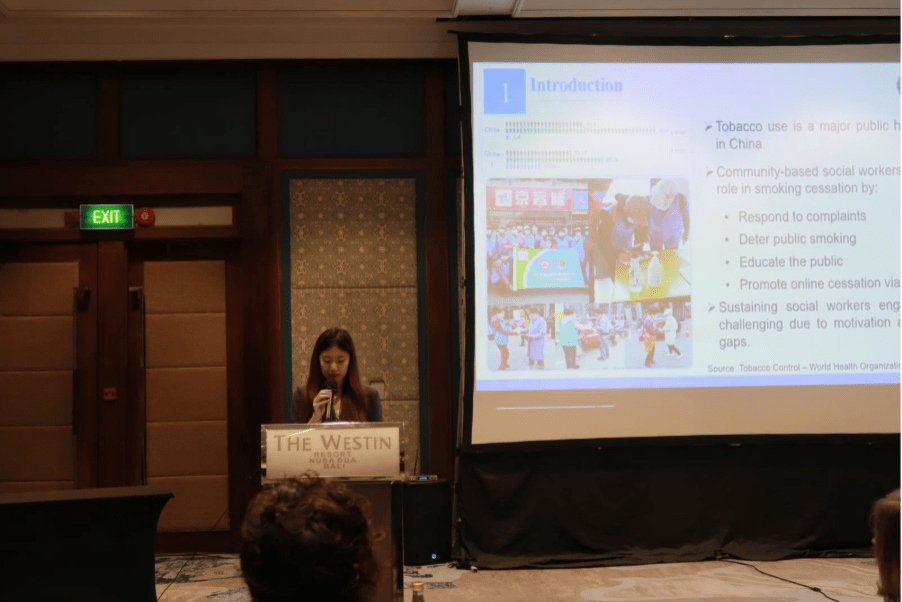
Fengyi Sun, a master’s student (Class of 2023) at Wuhan University, presented Motivating Social Workers for Smoking Cessation: A Discrete Choice Experiment in Urban China.
Using DCE, the study investigated Beijing anti-smoking volunteers’ preferences for different incentive mechanisms. Results indicated that financial incentives and transport subsidies significantly increased willingness to participate, while heavy workloads and strict performance evaluations reduced motivation.
Two distinct groups of volunteers were identified—“monetary-oriented” and “value-driven.” The study recommends designing differentiated incentive strategies tailored to volunteer motivations to support the sustainable development of smoking cessation initiatives.
Looking Ahead
ECHORA will continue to encourage and support global scholars in participating in international health economics exchanges, growing together in empirical research, policy evaluation, and methodological innovation. We look forward to seeing even more new faces at the next IHEA congress!
Written by: Peizhe Yan

 ECHORA Global