
January 14 – 16, 2026 | York, UK
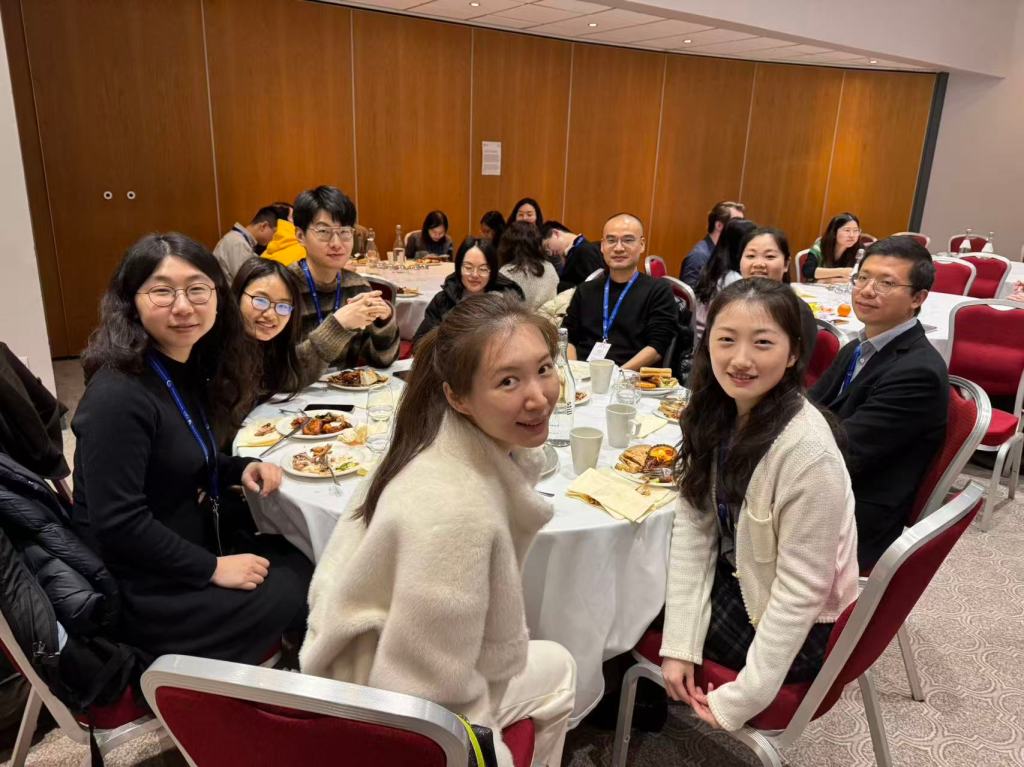
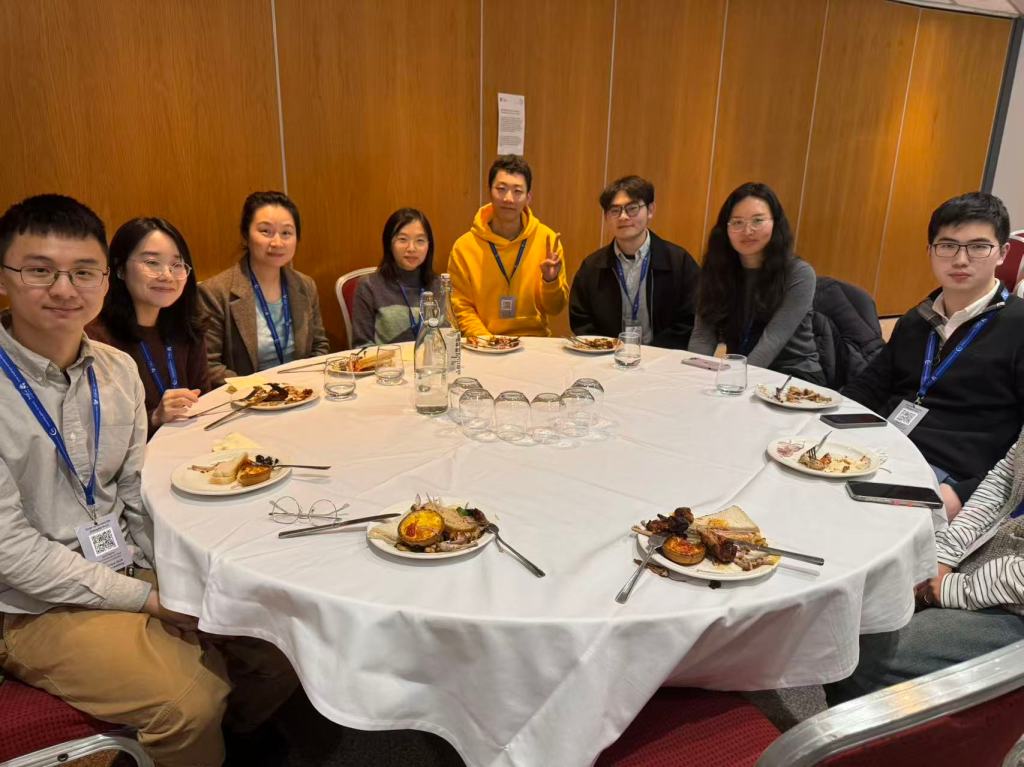
The Health Economists’ Study Group (HESG) Winter Conference was successfully held in York. As one of the most long-standing and prestigious academic forums for health economics in the United Kingdom, HESG brings together scholars from universities, research institutions, and policy departments to engage in high-quality peer discussions on cutting-edge research. Several members of ECHORA participated in the conference, presenting their latest findings and showcasing the exploration of early-career researchers in fields such as Health Technology Assessment (HTA), labour and health economics, and causal inference.
© ECHORA, 2026.
© ECHORA, 2026.
Research Highlights and Presentations
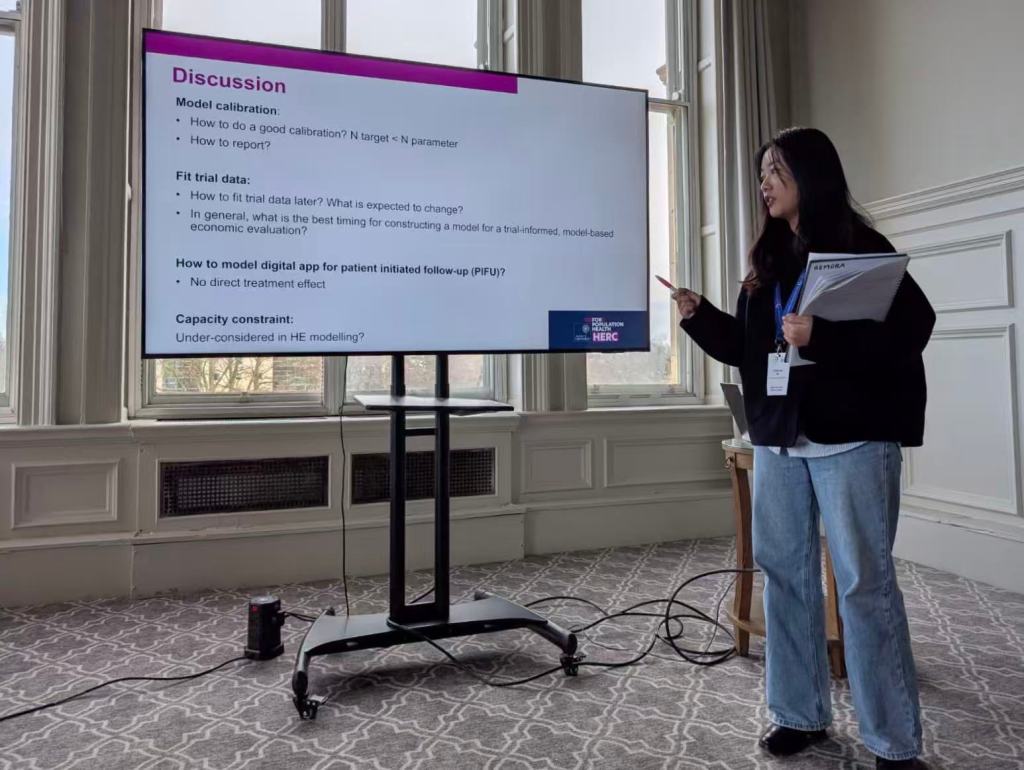
Dr. Mingxuan Wu, Research Associate at the University of Manchester, presented her collaborative study titled “Modelling the cost-effectiveness of alternative service delivery and organizational scenarios for patients with rheumatoid arthritis using discrete event simulation.” The paper was formally discussed and reviewed by Dr. Xinyu Li and Associate Professor Helen Dakin from the University of Oxford.
The study utilizes a Discrete Event Simulation (DES) model to explore the impact of digital Patient-Initiated Follow-Up (digital PIFU) on cost-effectiveness and outpatient resource utilization for patients with rheumatoid arthritis. By directly simulating healthcare capacity constraints, the research reflects the current status of routine and acute outpatient clinics within rheumatology services in Greater Manchester. Calibrated against waiting times and the incidence of flare-ups, the model assesses cost-effectiveness under current supply-and-demand dynamics. Scenario analyses revealed that digital PIFU robustly shortens waiting times for patients experiencing flares and demonstrates significant cost-effectiveness compared to current care models. This research provides preliminary evidence for the planning and application of digital healthcare services within NHS secondary care.
© ECHORA, 2026.
Dr. Bingqing Guo, a Postdoctoral Research Fellow at the University of Manchester, shared her experience as a first-time HESG attendee:
“It was a rewarding experience to participate in HESG for the first time and to serve as a discussant. I had the pleasure of discussing an experimental study conducted in Uganda by a team from the UK, Uganda, and New Zealand. The study employed a Threshold Public Good Game design to explore cooperation and strategic behavior in community latrine construction in schistosomiasis-endemic areas, offering valuable insights into the application of experimental methods in health. I am grateful for ECHORA’s organization and honored to have met so many colleagues and mentors in the UK health economics community. I look forward to our continued growth and seeing everyone again at future meetings in Glasgow and beyond!”
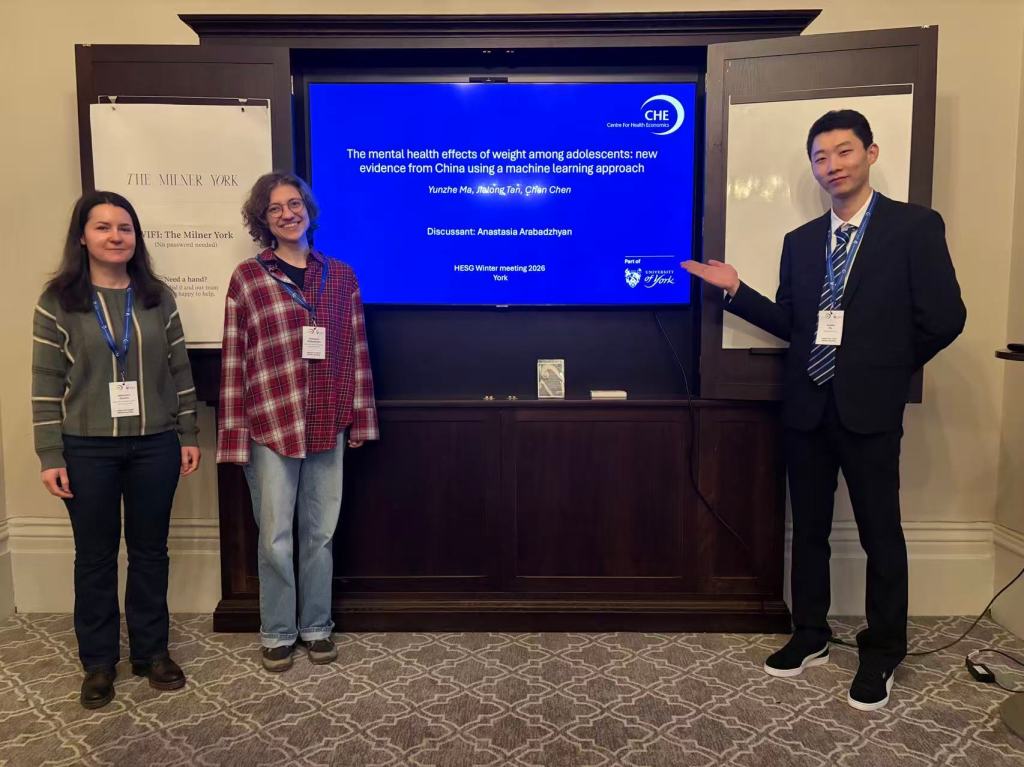
Yunzhe Ma, a Master’s student in Health Economics at the Dong Fureng Institute, Wuhan University (supervised by Prof. Lei Qin of UIBE), served as the lead presenter for a collaborative study on the impact of adolescent weight on mental health. He was joined in this research by Dr. Chen Chen (Associate Professor, School of Public Health, Wuhan University) and Dr. Jialong Tan (Assistant Professor, Dong Fureng Institute, Wuhan University). Using data from the Chengdu Positive Child Development Survey, the team moved beyond traditional linear models. They employed Machine Learning estimators to approximate the data-generating process and utilized Debiased Machine Learning Instrumental Variable (DML-IV) methods to address endogeneity and covariate model misspecification. The findings indicate that while weight gain has a negative impact on overall mental health among adolescents, it does not significantly increase the probability of depressive symptoms. Heterogeneity analysis showed that boys, adolescents from high socioeconomic status families, and non-left-behind children are more susceptible to the adverse effects of weight gain. The mechanisms appear to be driven primarily by a decline in self-perceived physical appearance and perceived social popularity.
© ECHORA, 2026.
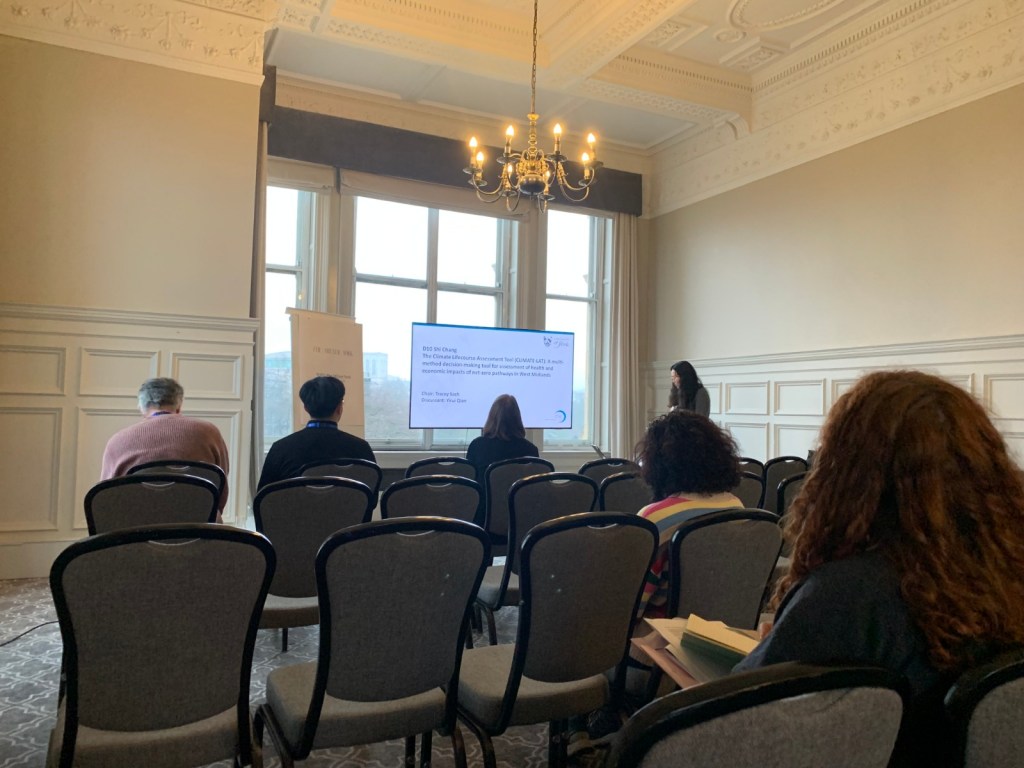
Dr. Yirui Qian, a Research Fellow at the Centre for Health Economics (CHE), University of York, served as a discussant for the study “The Climate Lifecourse Assessment Tool (CLIMATE-LAT): A multi-method decision-making tool for assessment of health economic impacts of net-zero pathways in West Midlands,” authored by Shi Chang and colleagues from the University of Birmingham. Developed in collaboration with policymakers and stakeholders, this research introduced a decision-support tool to evaluate the health-economic co-benefits of regional decarbonization pathways. The tool integrates environmental exposure, health risks, and economic evaluation methods. Based on a multi-disease health economic model combined with life tables, Markov models, and relative risk assessments, it simulates the long-term population health impacts of various net-zero scenarios while highlighting disparities across regions and demographics. Through a visualization platform, the tool provides intuitive support for integrated decision-making regarding climate and health.
© ECHORA, 2026.
ECHORA Global remains committed to encouraging and supporting global early-career scholars in international health economics exchange. We look forward to seeing more new faces at our next academic conference as we continue to grow together in empirical research, policy evaluation, and methodological innovation.
Contributor: Peizhe Yan

 ECHORA Global